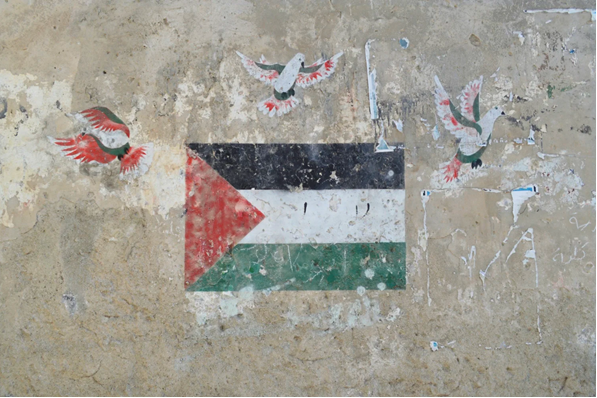
| y Jonathan Kuttab May 15 is commemorated in Israel as Independence Day, marking the creation of the Jewish state of Israel. Palestinians, however, mark it as the day of their Nakba (“Catastrophe”). The two concepts are closely, intractably linked: the creation of the state of Israel would have been impossible to accomplish without the Nakba. To establish a Jewish-dominated state in Palestine, it was necessary to displace, conquer, and dispossess Palestinians of their homeland before settling it. Those who claim otherwise, who point to theoretical forms of Zionism that may have sought to accommodate themselves to Palestinian Arab presence and nationalist aspirations have refused to see that such forms of Zionism have never taken root in Israel. Dominant forms of Zionism have always sought the erasure of Palestinians and the creation of a Jewish state in Palestinian lands, at any cost. A brilliant law student at Harvard, Rabea Eghbarieh, wrote a compelling article, which was published in the Columbia Law Review after much controversy. He argued that “Nakba” should be recognized under international law as a separate war crime and crime against humanity, in that it is composed of elements that include but go beyond genocide, ethnic cleansing, or apartheid. It is a crime that aims at the total displacement and erasure of an ethnic or national group by a variety of methods, which vary as opportunities permit and which often turns uglier and more genocidal when faced with any resistance. For this reason, many Palestinians talk of the “ongoing Nakba,” which started well before May 15, 1948 and continues to the present day. To understand this, we need to revisit what actually happened in Palestine in 1948. The Zionist myth, perpetuated in the West, is that seven Arab armies attacked Israel just as it was born. The myth claims that Palestinians left at the behest of Arab leaders to enable the annihilation of Jewish settlements and prevent the creation of a Jewish state, a state mandated by the United Nations but rejected by the Arabs. The reality was very different. Jewish armed militias were already systematically ethnically cleansing Palestinian villages and towns and expelling their Arab inhabitants months before any Arab armies intervened to save some of the land allocated for an Arab state. The new state of Israel expanded beyond the areas allocated (unfairly) to it by the Partition Resolution, which the Arabs did in fact reject as inherently unjust. Numerous UN resolutions demanding Palestinian refugees be allowed to return (starting with UN Resolution 194) were rejected outright by Israel, which continues to this day to deny Palestinians the right to return. They say allowing such return is incompatible with the idea of Israel as a Jewish state. The creation of the state of Israel was predicated on the need to bring in as many Jews as possible from all over the world and to drive out and keep out as many Palestinians as possible. When driving them out was not possible, as in the aftermath of Oct. 7, annihilation and genocide became necessary. In the meanwhile, military rule, apartheid, discrimination ,and ethnic cleansing was required to be used against Palestinians to maintain the Jewishness of the state and in the areas under its control. This statement is not a polemic or accusation. It is the cold reality of the Zionist need to achieve demographic domination, as well as control of land and resources in Palestine, on behalf of Jews and Jews only. Starting from a situation where Jews in Palestine were a small minority owning around 5% of the land, no “Jewish state” could be established without drastically changing the demographics and ownership of the land, by hook or by crook. Another important component in the Nakba, the plan to transform Palestine into a Jewish state, was the need to negate the existence, or legitimacy of Palestinian identity in all its forms. Even today, Zionists and Zionist sympathizers bristle and object to the Palestinian flag, Palestinian culture, songs, food, or any expression of Palestinian identity. For many years, even the word “Palestine” was taboo, or it was at least vilified by being coupled with the term “terrorism.” Even among so-called “liberal” Zionists, after Oslo the term was confined to Arabs in the West Bank and Gaza. Palestinian citizens of Israel are referred to as “Israeli Arabs” and those in the diaspora as Arab refugees. Ending the Nakba starts by recognizing Palestinians as a people entitled to self determination, equality and the right to live in their own homeland. Anything short of that is unacceptable, and those accepting any such outcome are effectively guilty of complicity and participation in the crime of Nakba, while asserting Palestinian rights and identity in the face of overwhelming forces is truly the proper and decent response. End the Nakba. Free Palestine. |