
By Ghada Abdulfattah
Ms. Abdulfattah is a writer who lives in Gaza.
- April 10, 2026
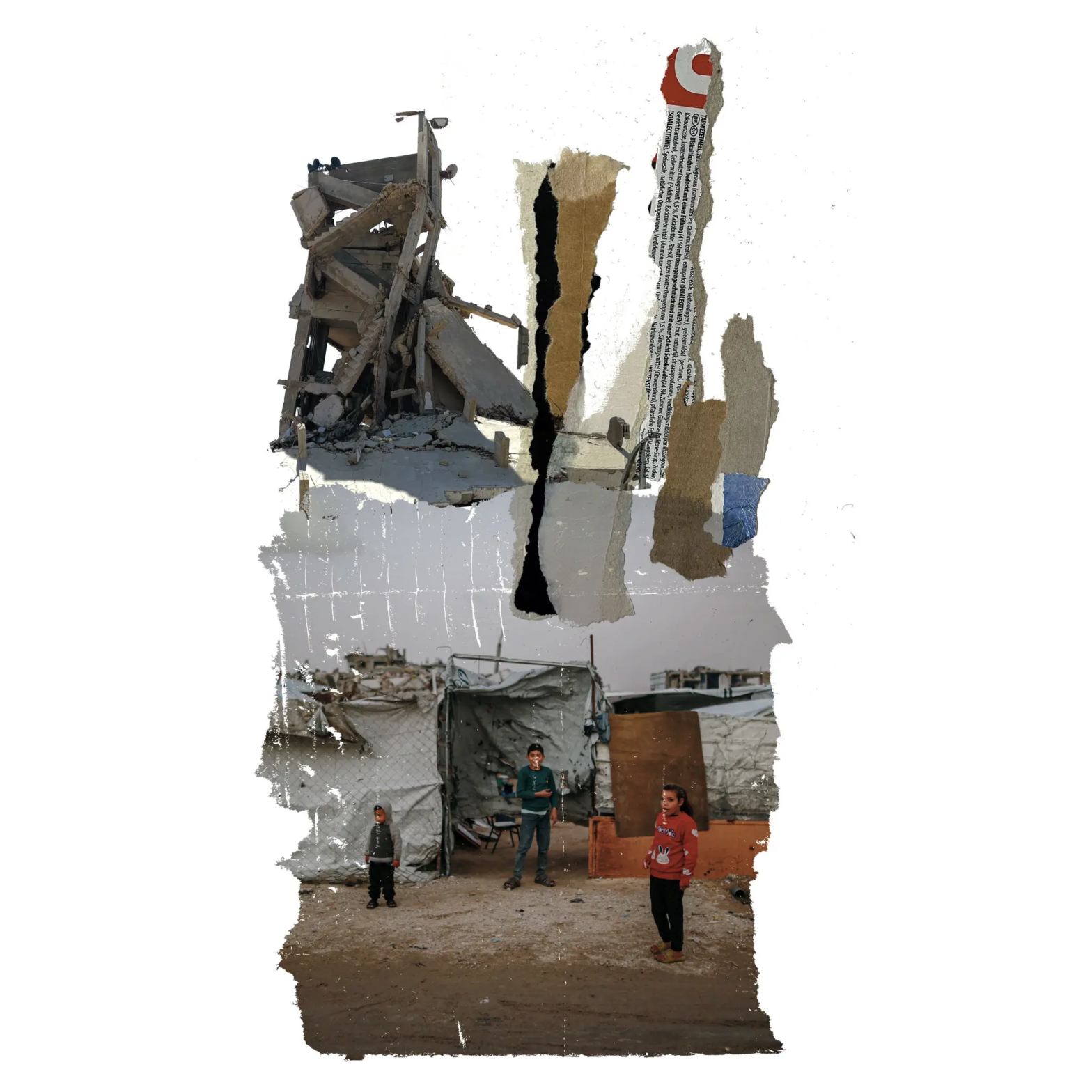
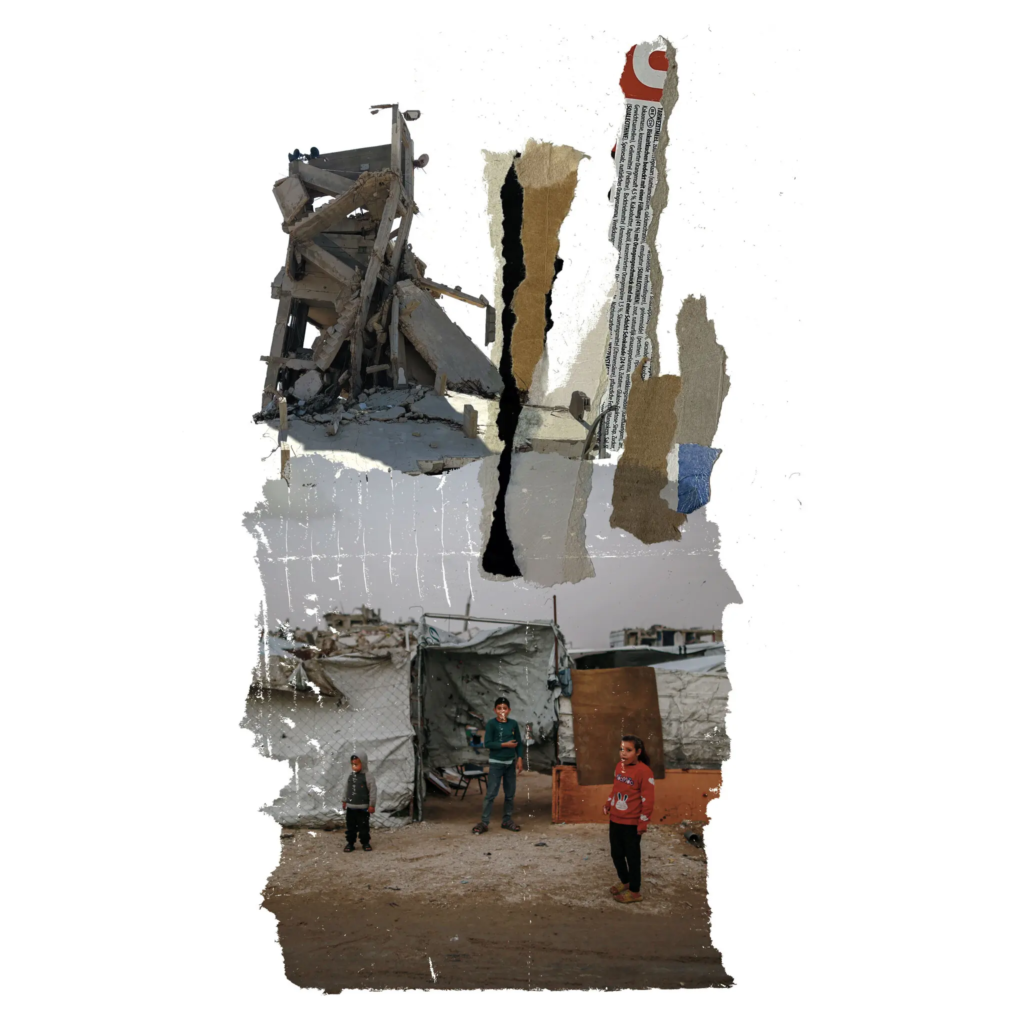
Rubble is everywhere. In Gaza, there’s more than one kind. Towers that once held dozens of families have been reduced to hills: broken slabs stacked in layers, steel bars twisted through them like exposed nerves, concrete pancaked over furniture. Sometimes, the remains of a home lean at an angle, like the Tower of Pisa. Other buildings are hollowed out from below, the lower floors erased while the upper floors hang in a crooked pause, held up by some stubborn rebar and luck. The streets narrow into corridors of debris. People walk more slowly, watching their footing, scanning for something steady before their next step.
It isn’t just the sadness of what was demolished. Seeing endless piles of concrete brings a second layer of violence — the violence of being forced to live with destruction. Rubble doesn’t just destroy the past; it erases the future. It forces your mind to stop imagining, to stop thinking, to stop dreaming about life after today.