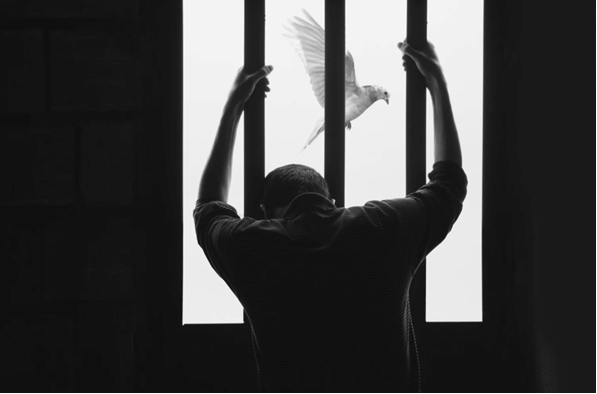
| “The Spirit of the Lord is on me, because he has anointed me to proclaim good news to the poor. He has sent me to proclaim freedom for the prisoners and recovery of sight for the blind, to set the oppressed free, to proclaim the year of the Lord’s favor” (Luke 4:18). This past week we caught a glimpse of the joy of families when reunited with their loved ones after years of captivity. We also heard harrowing stories directly from the released captives of the suffering, torture, food deprivation, and myriad humiliations and agonies they experienced in their captivity. In the US media, such scenes have been limited largely to the Israeli hostages and their families. Mention was also made of the Palestinian captives who were also released to their loved ones, even though Israel actually mandated that those released to areas under their control would not be allowed to publicly celebrate their freedom. Israel and much of the Western world still treats these individuals as guilty terrorists and not as hostages, prisoners, or victims. There is hardly a Palestinian family in Gaza or the West Bank whose members have not directly experienced the agonies of an Israeli prison. Whether taken from his home in the early hours of the morning or herded together with others from schools, hospitals, streets and other community spaces, almost every adult Palestinian male has experienced being detained or imprisoned at one time or another. Many have been subjected to kangaroo courts by military tribunals, wherein the primary if not sole evidence is a confession taken from the defendant or others under conditions of torture and isolation. Others are given arbitrary “administrative detention orders,” and jailed without any charges or trial. Yet others, during the recent events in Gaza, were simply detained, stripped naked, and then shipped to field detention centers, like the notorious Sde Teiman, where they were subjected to torture, rape, starvation, amputations, humiliations, or simply kept as bargaining chips to be traded for Israeli hostages. 70 of such detainees have actually died in detention since the war on Gaza began two years ago. And now that the current prisoner exchange is complete and the Israeli captives have all been released, approximately 10,000 Palestinian prisoners remain in Israeli jails. Trump’s “peace plan” has no provisions for their release. Israeli Minister Ben Gvir and his chosen head of the Israeli Prison Authority publicly boast that they will make the prisoners’ lives a living hell. Ben Gvir announced that he has reduced the food given to the prisoners in both quantity and quality, that he will deny them the “privileges” of exercise, television, radio, books, , hygiene supplies, newspapers, canteen access , family visits and anything else necessary for a dignified captivity. The excuse for such treatment used to be that this is done in retaliation for the conditions of the detention of Israeli hostages by Hamas. But now, even though that excuse is gone, we are not likely to see an improvement in prison conditions. That is because these conditions are based on a view that denies the captives their essential humanity. Ben Gvir openly speaks of them as “beasts in human form” and proclaims that he will treat them as such. This is not an accusation or claim made by Palestinians, but it is what he has openly bragged about. Sadly, the dehumanization of Palestinian prisoners is also shared by the US media. They know the 20 Israeli hostages by name, their pictures, and family connections, seeing them as human beings. Massive amounts of airtime are dedicated to learning about them, their families, and their grief, as well as the process of their rehabilitation. This includes the soldiers, who are never shown in uniform. Palestinian prisoners, on the other hand, are never referred to as the kidnapped hostages they are, but they are at best faceless numbers of criminals being traded, under duress, for real people. At FOSNA, our attitude towards all prisoners is guided by the message of Christ, especially the vision of final judgement in Matthew 25, where Christ declares, “I was a prisoner and you visited me.” It is our moral obligation to recognize the humanity and feel the anguish of every prisoner, to proclaim for them liberty. While in captivity, we believe prisoners should be treated with decency and humanely, regardless of what they are charged with and whether they are guilty or innocent victims in the hands of their enemies. Our Friends of Palestinian Detainees initiative arranges for Palestinian prisoners to be paired with churches in the US who can communicate with a prisoner’s family and relate to them directly. To learn more about this initiative and how your faith community might get involved, please visit the following link: Friends of Palestinian Detainees. We also undertook a campaign for the release of Mohammed Halabi, the former head of World Vision in Gaza, who has undergone a harrowing experience and a lengthy trial, and was still appealing an 11 year sentence when he was released as part of a recent deal. He had lost over a third of his weight and was unrecognizable upon release. Last week, Mohammed sent us a message of thanks, and shared with us about a dream he had 5 years ago. It was a vision of Jesus Christ, and assured him that Jesus’ followers will help him be released before he served his full sentence. We continue to advocate for the release of all prisoners not only for their own sake and for the sake of their families, but also because without releasing them there can be no end to this ongoing war. One frightening message sent out as a result of the recent prisoner exchange to all Palestinians is that the only way for them to see their loved ones again is if some group, like Hamas or another, to kidnap Israelis and trade them for their own captives. There must be a better way. Prisoners, even those who took up arms and fought their enemies, are no longer combatants, and they must be treated humanely and released at the end of the fighting as part of the conditions and structure for a new state of peaceful coexistence. This is true for those who fought the occupation, whom Israel considers to be terrorists. How much more is it important to release those who are not fighters, but are captured and are incarcerated by the occupation forces. Surely we should work for a peace which also includes the release of all prisoners, so they and their families can share in the joy we have seen among the captives already released. |