

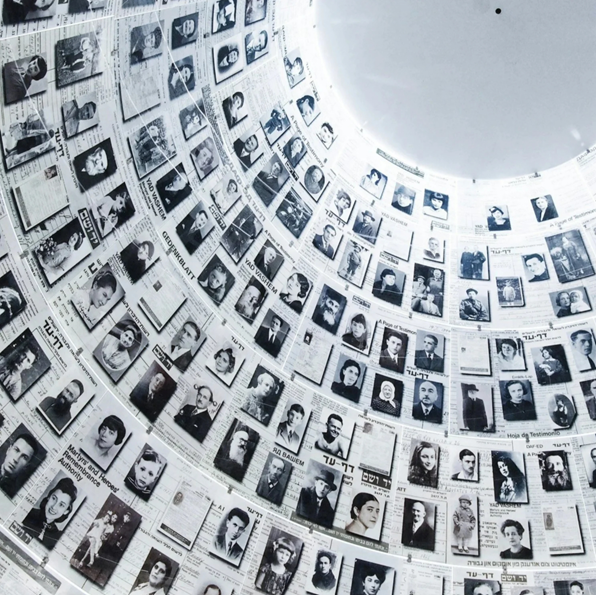
| by Jonathan Kuttab We sometimes hear that it is a pity that Palestinians do not know and are not being taught in their schools, as part of their curriculum, about the Holocaust in Germany. We are told that Palestinians need to learn about the Holocaust to better understand Israelis and how and why they act as they do. I actually do believe it is important and entirely beneficial for Palestinians to learn about the Holocaust. Sami Awad, a Palestinian activist was indeed deeply moved when he took a trip to Auschwitz and the extermination camps in Poland. I, too, was moved when I visited Yad Vashem in Jerusalem. The evil that was manifested there on an industrial scale is, in fact, something to ponder, and it needs to impact our attitude to toxic, racist, and fascist ideologies. We all need to be shocked and reminded of the potential for unimaginable evil that perhaps resides in all of us. The real problem is in what lesson does one learn from the Holocaust? For one thing, the evil is so great that anything connected to it becomes an absolute that often clouds rational thinking, and prevents consideration of all other relevant factors. Unfortunately, many people take the wrong lesson from the Holocaust, namely that it shows that international law is meaningless, that the world is a cruel and uncaring place, and that the only security lies in having tremendous and overwhelming military power, in ignoring all laws and restrictions, and in creating your own standards. In other words, the message is that Hitler was correct after all and that “blood and iron” are the only factors to consider. “Never Again” to such people means only that Jews (or any other group for that matter) can only rely on their own military power and need to do whatever they think it takes to achieve security. It feeds a disdain for international norms and provides a justification for all manner of militancy and unjust practices in the name of security, to make sure this evil never happens again to one’s own group and to hell with everyone else. There is another lesson, however, that can and should be learnt from the Holocaust. It is that even relatively small incidents of racism, discrimination, and bigotry can, if not checked immediately, mushroom into great and unimaginable evil of the type manifested in the Holocaust. It is the sobering thought that all of us, perhaps, carry within us the potential, if not checked, for carrying out unimaginable acts of cruelty towards others. That is why international law, in light of the Holocaust, developed mechanisms for international solidarity, accountability and sanctions against all forms of racism and racial discrimination. A convention dealing with this matter is called the Convention for the Prevention and Punishing the Crime of Genocide to indicate that genocide, like the Holocaust, does not suddenly occur in a vacuum but is often the result of incitement, laws and regulations, and practices that lead to the dehumanization of a particular group. It calls upon us to be vigilant and prevent, and not just punish, the crime of genocide. The true response to genocide and the Holocaust is therefore to build respect for and to enhance enforceability of international law, norms and institutions. It is to work to improve collective sensitivity against all forms of toxic racism and discrimination, and to strengthen empathy and solidarity as effective tools to limit, marginalize and delegitimize all forms of racism and discrimination, regardless of which group is being targeted and who are the perpetrators. That is why all vulnerable groups (ethnic minorities, minority religious groups, undocumented migrants, children, women, and others) are the most vulnerable and likely to be victims of discrimination, and ultimately genocide. Those who still abide by ideologies that call for supremacy, whether it is Christian Nationalism, Jewish Zionism, or Islamic fanaticism, should be challenged and restricted. Yet we need to recognize also that past victims can easily use their victimhood to seek exemption and even justification for their own racism and violence. After all, German feelings of being unjustly treated in the aftermath of WWI provided potent ammunition for the rise of Hitler and his drive for German power and supremacy. The fact that a people have been traumatized in the past is no guarantee that they will refrain from oppressing and traumatizing others. The state of Israel and the Zionist movement falls directly into that category. David Schipler of the New York Times argued that Palestinians and other Arabs need to be taught about the Holocaust in their schools. He said that precisely because of the Holocaust, Palestinians need to understand “Israel’s disdain for international law and its need for domination, supremacy and military superiority.” That is precisely the wrong lesson to learn from the Holocaust. |